Bangladesh
Bangladesh Shelter Vulnerability and Capacity Assessment_Final Report
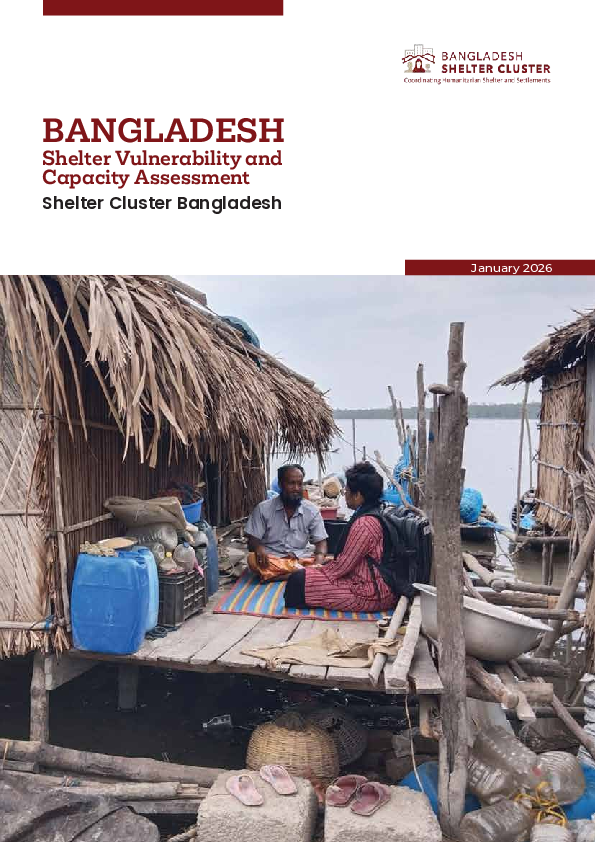
In response to the ongoing risk of disasters triggered by natural hazards across Bangladesh, the Shelter Cluster Bangladesh undertook a comprehensive Shelter Vulnerability and Capacity Assessment to identify communities most exposed to these risks. This assessment employed a community-driven approach, engaging directly with residents to capture their perceptions, lived experiences, and practical recommendations informed by previous hazard events. Through this participatory process, the initiative sought to uncover the underlying vulnerabilities of households and assess the resilience capacities of communities frequently affected by cyclones, monsoon floods, flash floods, and other recurring natural hazards.
The objective of the assessment is to generate evidence that would contribute to the revision of national shelter standards and support humanitarian partners in designing more effective, contextually appropriate, and community-centered shelter interventions.
This extensive effort was made possible through the dedicated support of Shelter Cluster partners; their collaboration was essential to completing the assessment successfully. In total, 3,078 quantitative household survey responses were collected to ensure a comprehensive and representative understanding of the conditions, risks, and needs of disaster-prone households. This large-scale dataset forms a reliable foundation for evidence-based planning and targeted programming.
To enrich the quantitative findings with deeper community perspectives, the assessment also included 84 Key Informant Interviews (KIIs) with influential community members such as teachers, religious leaders, and elected representatives. Additionally, 24 Focus Group Discussions (FGDs) were conducted at the community level to explore shared experiences, challenges, and coping strategies in greater depth. Together, these complementary methods provided a holistic picture of community vulnerability and capacity in the face of natural hazards across Bangladesh.